
Zinnias, In Color Are A MOMENT

Updated: Apr 8
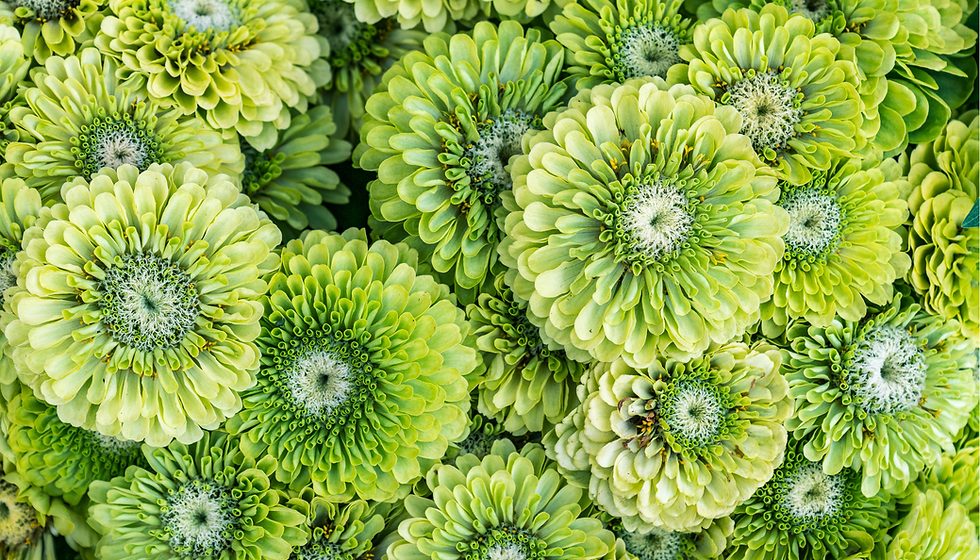
There is a certain generosity to zinnias that feels unmistakably like summer.
They arrive without hesitation—petals open wide, colors fully formed, as if they’ve been waiting just beneath the surface for the exact right moment to emerge. In the garden, they read as effortless. Rows of them catch the light in a way that feels almost painterly—corals beside crimsons, soft creams brushing up against saturated pinks, each bloom holding its own while contributing to something larger.
Zinnias don’t ask for attention in the way more delicate flowers do. They create it—layering color, texture, and movement into something that feels alive, expansive, and entirely welcoming.

A Story Rooted in Warmth and Resilience
Zinnias trace their origins to Mexico and parts of Central America, where they thrived in sun-drenched landscapes long before becoming a staple in cultivated gardens. Indigenous communities grew them for both ornamental and ceremonial purposes, recognizing early on what gardeners continue to value today: their durability, their vibrancy, and their ability to flourish under heat that would challenge more temperamental blooms.
When zinnias were introduced to Europe in the 18th century, they were initially overlooked—considered too simple, too coarse in form. It wasn’t until selective breeding transformed them into the diverse, multi-layered blooms we recognize now that they found their place in gardens across the world.
What was once dismissed became essential. Not refined into something unrecognizable—but elevated, without losing its character.

Color Without Restraint
Zinnias move through color with a kind of confidence that feels almost celebratory.
Bright magentas, fiery oranges, and saturated reds anchor the palette, while softer tones—blush, buttercream, pale lime—offer balance. Some varieties carry a single, bold hue; others reveal subtle gradients, their centers deepening into unexpected shades.
At the heart of each bloom is a structured center—often golden, sometimes chartreuse or deep rust—adding contrast and dimension. Petals radiate outward in clean, geometric layers or softer, more irregular forms depending on the variety. The effect is dynamic but grounded.

Form, Texture, and Movement
Zinnias offer variation in a way that feels almost curated. Some blooms are compact and button-like, their petals arranged with near precision. Others are fuller, layered, almost dahlia-like in their construction.
There are even varieties with open centers that invite pollinators, their structure designed as much for function as for form. Their stems are sturdy—upright, resilient—making them ideal for both garden display and cutting. And unlike more delicate flowers, zinnias continue to produce the more they are harvested. The garden becomes interactive: the more you take, the more they give.

In the Garden: Growing Zinnias with Confidence
Zinnias are among the most rewarding flowers to grow—particularly for gardeners looking for high impact with relatively low effort.
START FROM SEED
Zinnias germinate quickly and easily, making them ideal for direct sowing. Once the threat of frost has passed and the soil has warmed, seeds can be planted directly into the garden.
SUN IS ESSENTIAL
Choose a location with full sun—at least 6 to 8 hours daily. Zinnias thrive in heat and light, producing stronger stems and more abundant blooms when given ample exposure.
SOIL SHOULD DRAIN WELL
While they are adaptable, zinnias prefer well-draining soil. Overly wet conditions can lead to issues such as mildew, especially in humid climates.
WATER AT THE BASE
To keep foliage healthy, water should be directed at the soil rather than over the leaves. This helps prevent common fungal issues.
SPACING MATTERS
Proper airflow is key. Space plants generously to reduce the risk of powdery mildew and to allow each plant to develop fully.
CUT OFTEN
Frequent harvesting encourages more blooms. Zinnias are a true “cut-and-come-again” flower—removing mature blooms signals the plant to continue producing.
DEADHEADING EXTENDS THE SEASON
Removing spent flowers keeps the plant focused on new growth rather than seed production, prolonging the display well into late summer and early fall.

Why They Belong in Every Garden
Zinnias offer something that many flowers do not—consistency without predictability. They bloom steadily but never feel repetitive. Each plant, each stem, each color combination contributes to a garden that feels layered and alive.
They are generous—returning again and again over the course of a season, holding color through heat, and inviting both pollinators and people to stay a little longer.
And perhaps that is their quiet brilliance. They make abundance feel easy.


